Close
Carbon Registry India · A programme of NCCF
A standards-based voluntary carbon crediting programme. CR-I registers climate mitigation projects and issues, tracks and retires Marketable Carbon Units (MCUs) for verified emission reductions and removals.
Since 16.09.2021Carbon Standard v1.11 MCU = 1 tCO2e
What CR-I does
CR-I provides the framework for registering climate mitigation projects, approving and applying methodologies, independent validation and verification, and the issuance, tracking and retirement of MCUs.
It was established by the Network for Certification and Conservation of Forests (NCCF) and has operated since 16 September 2021.
At a glance
Get started
Choose your role. Each path leads to the documents and steps that apply to you.
IPP · Project developers
Design a project on an approved methodology, have it validated by an empanelled VVB, and earn MCUs for verified reductions and removals.
VVB · Auditors
Apply for empanelment, then validate and verify CR-I projects under the Validation and Verification Standard.
IMD · Methodology developers
Propose new methodologies or tools, or revise existing ones, through the Methodology Approval Procedure.
Registry · Buyers and public
Browse registered projects and comment on projects open for public consultation.
Registry participants
Project proponents (IPP), validation and verification bodies (VVB) and methodology developers (IMD) working with CR-I. Filter by role, sort or search by name.
How it works
Integrity
Independent assurance
Projects are validated and verified by independent bodies empanelled with CR-I; the validating VVB cannot carry out a project’s first three verifications.
Public scrutiny
Project design documents and new methodologies are open for a 30-day public consultation, and monitoring reports for 21 days, before they move forward.
No double counting
Each MCU has a unique serial number in an electronic registry, and credits issued by other programmes are excluded.
Governance
Final approval of registrations, issuances and methodologies rests with the CR-I Governing Council, advised by an Advisory Board.
What’s new · 7 March 2026
Version 1.1 of the Carbon Standard and the Validation and Verification Standard was approved on 24 September 2025 and applies from 7 March 2026, with a one-year transition period.
New
Micro-scale projects can now be validated and verified by qualified individual experts (IVVEs), not only by empanelled VVBs.
Changed
Micro is now up to 10,000 tCO2e a year and small up to 60,000, down from 20,000 and 100,000. Scale sets fees, caps and the simplified route.
Changed
Non-AFOLU projects have 3 years from the start date to validate, or 4 with a new CR-I methodology. AFOLU projects have 6. VVB eligibility now includes Article 6.4 and ISO 17029.
New
Methodologies can now be built on EPD principles with a third-party-verified Life Cycle Assessment (ISO 14044), without VVB assessment.
Part of NCCF

NCCF came into existence in January 2015 as a registered society of experts, professionals and stakeholders of natural resources. It develops India-specific, globally benchmarked sustainability standards and works on policy advocacy, training and capacity building. Carbon Registry India is one of its programmes.
NCCF standards
CR-I sits alongside NCCF’s sustainability certification standards for forests, landscapes and products.

NCCF standard
India’s forest management certification scheme, endorsed by PEFC.
NCCF standard
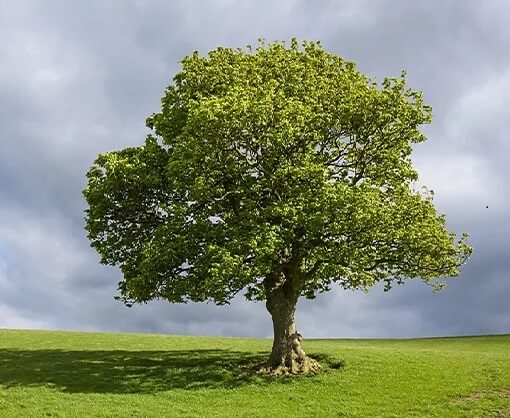
Certification for trees grown outside recorded forest areas, such as on farms.
NCCF standard
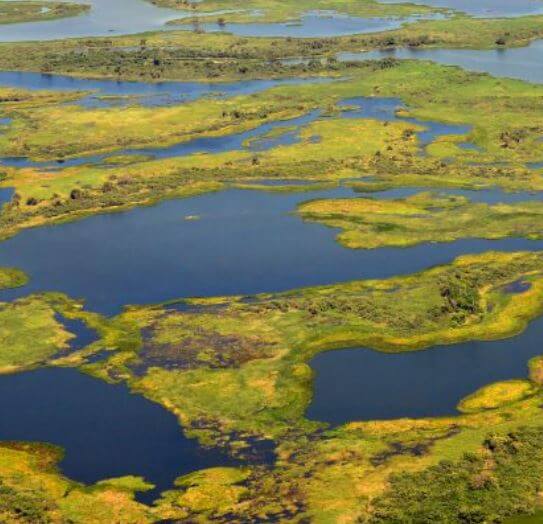
Certification for the management of protected areas and wetlands.
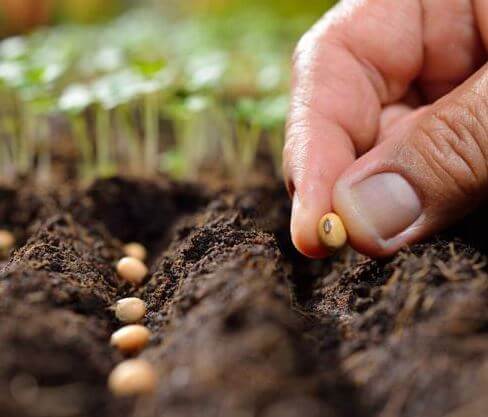
NCCF standard
Certification of planting material by origin, variety and stock.

NCCF standard
Certification for tourism managed in balance with nature conservation.

NCCF standard
A certification scheme being developed for biofuels, bioliquids, biogas and bioproducts.